
What's new
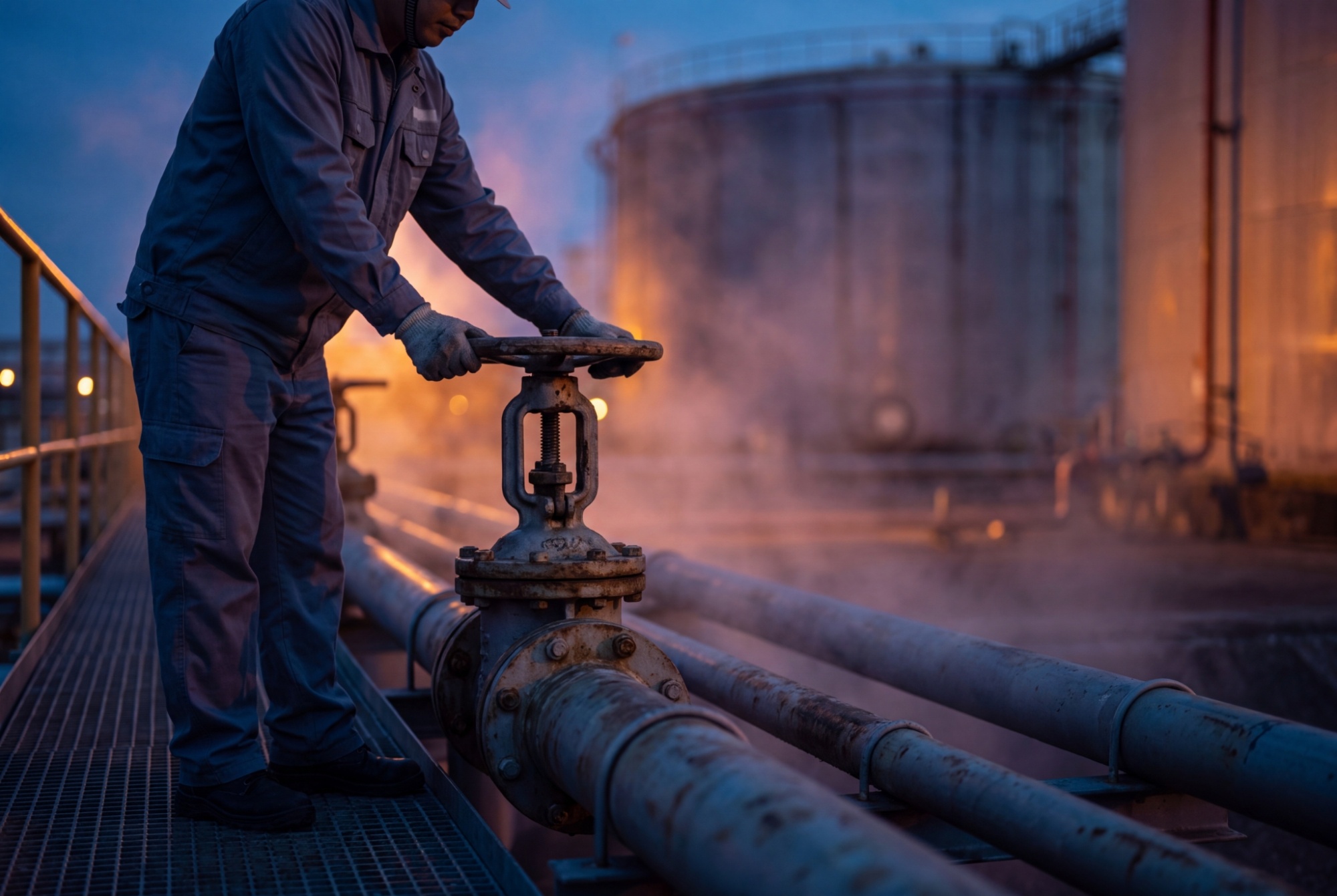
Human factors in valve criticality analysis
21st October 2026
Guidance on valve criticality analysis (VCA), helping organisations prioritise manual valves for saf...
Publication

Research report: literature review and technical workshop proceedings regarding health, safety, environment, security and sustainability issues for ammonia and methanol as maritime fuels
21st October 2026
EI 3650 Research into ammonia and methanol as lower-carbon maritime fuels, identifying safety, susta...
Publication

Workshop report: sovereign AI for UK energy security – Forum report and recommendations
12th October 2026
AI in energy: expert insights on governance, resilience, procurement, assurance and skills, with rec...
Publication

Energy Institute launches new industry programme to tackle barriers to AI adoption in energy
21st October 2026
Applied Computing and KBR appointed Chair and Vice Chair of new Applied AI for Energy Committee...
Media release

Embedding circularity across the life cycle of assets
13th October 2026
EI 3604 Embedding circularity across the lifecycle of assets provides practical actions to embed cir...
Publication
EI Technical + Innovation key work areas
EI Technical + Innovation’s work can be divided into three overlapping themes, developed through member collaboration, dialogue with regulators, academia and wider stakeholders. Click each theme to discover last year’s highlights and this year’s activities.
The energy transition
Carbon capture usage and storage (CCUS)
Key work area: Carbon capture usage and storage (CCUS)
Facilitating the expansion of carbon capture and storage operations
Key highlights
- Published Good plant design and operation for onshore and offshore carbon capture installations, second edition, supporting developer and operator in procurement and management of plant safely and providing guidance on the various elements of the CCUS chain.
- Published Hazard analysis of onshore and offshore carbon capture installations and pipelines, second edition, ensuring that hazards are appropriately identified, quantified, and mitigated.
- The complementary documents update first editions published in 2010 and 2013 and reflect major advances since original publication.
Forward programme
Our focus in 2025 will include:
- Publishing guidance on the measurement of carbon dioxide stream impurities.
- Updating the hazard analysis guide to include an expanded set of dispersion modelling examples.
- Investigating material degradation, corrosion and wider asset integrity associated with conveyance and storage of carbon dioxide.
- Validating equations of state for captured carbon stream composition through a laboratory campaign and thermodynamic modelling.
- Advancing understanding of running ductile failure and fracture propagation for onshore and offshore pipelines.
- Improving knowledge on CO2 transportation and storage flexibility.
- Investigating hazards of working on new and repurposed offshore structures used for CO2 streams.
Recent publications
Collaborating organisations
The EI is proud of collaborating with the following organisations in our programme development:
Collaborating organisations
The EI is proud of collaborating with the following organisations in our programme development:




Hydrogen
Key work area: Hydrogen
Understanding and addressing technical challenges for the deployment of a hydrogen economy
Key highlights
- Published EI 3575 Research report: Gas compressors for 100% Hydrogen duty, addressing the unique properties of hydrogen versus natural gas, and the impact on compressor design, size, safety, and performance.
- Published EI 3560 Research report: Global activities in hydrogen development, encompassing production, transportation, distribution, storage, and utilisation, to ensure the necessary infrastructure are ready and available for a seamless transition.
- Published EI 3561 Research report: Understanding stakeholder needs and integration challenges across the hydrogen value chain, to support understanding of stakeholder roles in advancing a hydrogen economy.
- Hosted a five-year planning workshop at DNV’s Spadeadam site which sought views and input from stakeholders on the future of the EI hydrogen work programme.
- Hosted webinars on hydrogen compression transitioning to 100% hydrogen duty and evaluating the energy balance and efficiency of a whole hydrogen energy system.
Forward programme
Our focus in 2025 will include:
- Developing guidance on asset integrity management of change for operators considering repurposing their natural gas network to hydrogen service.
- Developing a position paper on competence, skills and training for the transition to a hydrogen economy.
- Contributing to revision of the Energy Essentials introductory guide to hydrogen, designed for everyday energy consumers.
- Developing quantitative risk-based guidance for determining safe separation distances associated with hydrogen storage and dispensing equipment.
- Organising a workshop during International Energy Week to bring together senior stakeholders to discuss hydrogen's current role and future potential.
- Developing a training course, tailored for individuals eager to enter the hydrogen industry.
- Continuing support for the SAFEN JIP on hydrogen and ammonia hazard data availability.
- Continuing to undertake research on large scale storage of hydrogen (and its liquid derivatives) for the import and export of hydrogen.
Recent publications
Collaborating organisations
The EI is proud of collaborating with the following organisations in our programme development:
Collaborating organisations
The EI is proud of collaborating with the following organisations in our programme development:


Offshore wind (G+)
Key work area: Offshore wind (G+)
Working to create a safer and healthier global offshore wind industry
Key highlights
- Analysed and published industry health and safety incident data through the G+ website.
- Published an offshore windfarm transfer document, second edition, providing a scenario-based risk assessment for each method of transfer.
- Published guidance on unmanned aircraft systems, tailored to the wind industry.
- Published a paper on steel fabrication for the offshore wind industry to support developers in their relationship with fabrication yards.
- Published guidelines on arc flash and shock labelling and associated signage, providing a framework for developers, OEMs and national safety authorities.
- Published lifesaving rules for the offshore wind industry, with an accompanying implementation support guide.
Forward programme
Our focus for 2025 will include:
- Developing guidance on welfare provision, severe weather preparedness and H&S considerations for the deployment, maintenance and recovery of surveying buoys.
- Developing our data programme, exploring new metrics on injury severity, causality and leading indicators.
- Continue to build on and grow our presence in the Americas and Asia-Pacific region.
Recent publications
Collaborating organisations
The EI is proud of collaborating with the following organisations in our programme development:
Onshore wind (SafetyOn)
Key work area: Onshore wind (SafetyOn)
Leading health and safety for the onshore wind industry
Key highlights
- Analysed and published industry health and safety incident data through the annual health and safety incident data report.
- Published guidelines on mobile crane lifting for onshore wind farms.
- Published guidelines to raise awareness on wind turbine generator high voltage access.
- Published a Safe by Design workshop report on assessing the hazards and management of risk relating to ice throw and ice fall.
- Published a Safe by Design workshop report on the design of chain hoists and ancillary equipment, lift plans, permits, controls, training and competency across industry.
- Held the inaugural Stand Up for Safety Week (January 2024), an initiative dedicated to creating time to discuss the hazards of working onshore and measures to take to reduce risk to health and safety.
Forward programme
Our focus in 2025 will be:
- Examining the processes of design risk management and the Principal Designer role, in relation to CDM projects on both operational and construction sites.
- Developing understanding of the occurrence of ice fall and ice throw incidents, the associated conditions, and performance of existing control measures.
- Building the relevance and engagement of SafetyOn in the Republic of Ireland, including the collection of incident data, and hosting a stakeholder forum in 2025.
Recent publications
Collaborating organisations
The EI is proud of collaborating with the following organisations in our programme development:
Power systems
Key work area: Power systems
Decarbonising power generation
Key highlights
- Published guidance on the design, construction, operation, and co-location of green hydrogen production plants.
- Published guidance for gas-fired power station operators to assess readiness to accept hydrogen-natural gas blends as fuel (2%, 20%, 100%).
- Published principles for a safe system of work for the energy sector, to help organisations manage mechanical and electrical safety.
- Developed guidance on the co-location of battery storage with renewable plant.
- Revised guidance on safe storage and handling of biomass.
- Revised and republished guidance on managing static electricity hazards.
Forward programme
Our focus in 2025 will include:
- Updating guidance on short-term closure and preservation of gas turbine power stations.
- Developing guidance on carbon capture and storage for thermal power stations.
- Developing guidance on preventing contamination of soil and ground water from fire water run-off and other contaminants from battery energy storage sites.
- Revising guidance on arc flash risk management.
- Report on replacement of SF6 switchgear with SF6-free switchgear.
- Updating guidance to help operators comply with cybersecurity regulations.
- Developing guidance for safe working practices on and around battery energy storage facilities.
- Updating guidance on safety integrity of electrical supply protection systems.
- Updating guidance on earthing, grounding and bonding.
- Updating guidance on inspection and maintenance of underground electrical cables.
Recent publications
Collaborating organisations
The EI is proud of collaborating with the following organisations in our programme development:
Collaborating organisations
The EI is proud of collaborating with the following organisations in our programme development:
Health, safety and environment
Asset integrity and life extension
Key work area: Asset integrity and life extension
Championing asset integrity and age and life extension across all technologies
Key highlights
- Provided a global focal point to develop and maintain a portfolio of key asset integrity and ageing and life extension publications, accommodating emerging and low carbon technologies.
- Developed guidance on corrosion management for late life (through to decommissioning) assets.
- Drafted guidance on corrosion management and wider integrity for assets handling hydrogen.
- Updated guidelines for the management of microbiologically influenced corrosion in oil and gas production to a second edition.
- Updated guidelines for caisson life cycle integrity management to a second edition.
Forward programme
Our focus in 2025 will include:
- Developing guidance on integrity assessment practices for composite piping.
- Developing guidance for extreme environmental loading of floating offshore structures.
- Developing guidance on governance of data and data discipline, to enable use of artificial intelligence in a secure environment.
- Developing guidance on corrosion management and asset integrity for CCUS operations.
- Developing guidance on supporting deferral decision-making in relation to asset integrity management.
- Completing and publishing guidance on asset integrity for wind turbines.
Recent publications
Collaborating organisations
The EI is proud of collaborating with the following organisations in our programme development:
Environment and sustainability
Key work area: Environment and sustainability
Bringing together stakeholders to identify gaps in guidance and encourage cross-industry collaboration
Key highlights
- Workshop held on managing water stress during the energy transition, working with stakeholders to identify knowledge gaps.
- Workshop held on diversifying and decommissioning North Sea oil and gas (O&G) facilities in line with global biodiversity targets.
- Reviewed existing circularity framework metrics to understand how O&G companies can measure circularity in their processes.
- Explored sustainable supply chain opportunities for offshore wind, focusing on circular materials, decarbonised technologies, and nature-enhanced design.
- Developed guidance on decarbonisation economics, and the economic benefits of greenhouse gas (GHG) emission reduction projects. Additional metrics beyond net present value were suggested for long-term benefits.
- Developed guidance on dismantling and implementing circularity across the lifecycle of assets, including wind, solar, nuclear, and O&G platforms.
- Worked in collaboration with OGCI, IOGP, and IPIECA on recommended practices for detection and quantification of methane emissions.
Forward programme
Our focus in 2025 will include:
- Developing a global offshore wind supply chain directory to support procurement teams with meeting internal net zero targets.
- Collaborating with CL:AIRE to highlight sustainable management practices in soil and groundwater site management which deliver circular and nature positive outcomes.
- Providing upstream O&G companies with guidelines on estimating lifecycle GHG emissions, aligning with expected scope 3 disclosure requirements.
- Developing energy and emissions management training, for non-energy management professionals, in line with ISO 15001.
- Evaluating where recycled effluent can be used as an alternative to fresh water to mitigate scarcity risks.
Recent publications
Collaborating organisations
The EI is proud of collaborating with the following organisations in our programme development:
Health
Key work area: Health
Protecting worker health
Key highlights
- Published a Mental health framework to assist organisations in establishing, maintaining and improving employee mental health programmes.
- Presented at the International Occupational Hygiene Association (IOHA) Scientific Conference 2024 on diesel engine exhaust emissions; wearable technologies and occupational health risks associated with decommissioning activities.
- Completed a literature review on the prevalence of acute coronary syndrome across the offshore energy sector, exploring correlations between job role, lifestyle factors, and demographic characteristics.
- Developed guidance on cost-effective noise reduction solutions and management strategies.
- Investigated the exposures to diesel engine exhaust emissions from fixed and mobile installations and equipment used across the energy sector.
- Finalised guidelines on occupational health assessment for wind turbine workers.
Forward programme
Our focus in 2025 will include:
- Developing guidance on control measures for minimising exposure to airborne particles during abrasive blasting and cutting.
- Developing guidance on biological monitoring for assessing worker exposure to metals during abrasive blasting, welding and grinding.
- Revision of manual handling and ergonomic guidance sheets for offshore installations, identifying musculoskeletal hazards and encouraging an ergonomic approach to managing risk.
Recent publications
Collaborating organisations
The EI is proud of collaborating with the following organisations in our programme development:
Collaborating organisations
The EI is proud of collaborating with the following organisations in our programme development:



Human factors
Key work area: Human factors
Managing risk by supporting human performance
Key highlights
- Published EI 3548 Human factors standards for facility design: Early design quick reference guide to help designers apply human factors and ergonomic principles early in a project.
- Published guidance to help organisations integrate human factors into their safety management system.
- Published guidance on incorporating human factors into task-based and frontline risk assessments, allowing risk managers, work controllers and supervisors to identify human factors during job planning.
- Updated guidance on implementing new technologies to include use of artificial intelligence (AI) and automation.
Forward programme
Our focus in 2025 will be:
- Developing guidance to help organisations assess the optimal placement and function of safety critical valves.
- Developing a method to assess whether organisations have the right number of managerial and assurance roles.
- Developing an illustrated guide for designers summarising the human factors and ergonomics requirements for human-machine interfaces (HMIs).
- Developing a new human factors online training course to support the EI Human Performance Pathway.
- Developing short human factors videos for frontline workers, focusing on human factors, task analysis and accident investigation.
- Revising guidance on learning from incidents.
- Finalising new guidance on human error probabilities in quantitative risk assessment.
- Revising our human factors briefing notes.
Recent publications
Collaborating organisations
The EI is proud of collaborating with the following organisations in our programme development:
Collaborating organisations
The EI is proud of collaborating with the following organisations in our programme development:

Process safety
Key work area: Process safety
Control of major accident hazards
Key highlights
- Published EI 3015 EI Model code of safe practice Part 15: Area classification for installations handling flammable fluids, fifth edition.
- Developed an area classification training course based on the new edition of EI 15.
- Hosted a cross industry workshop on the management of barrier health in relation to process safety hazards, to inform an EI project on barrier health management.
- Hosted a workshop on Layer of Protection Analysis (LOPA) risk targets, to inform development of guidance on the use of LOPA.
- Presented EI guidance at multiple international conferences.
Forward programme
Our focus in 2025 will include:
- Developing guidance on the process safety challenges of introducing new technologies into existing facilities.
- Developing guidance on ammonia safety, from production to end use.
- Developing guidance on upstream normally unattended facilities.
- Hosting a joint conference with IMechE, Cogent and other stakeholders on process safety competency.
Recent publications
Collaborating organisations
The EI is proud of collaborating with the following organisations in our programme development:
Fuel quality and management
Aviation fuel handling
Key work area: Aviation fuel handling
Managing aviation fuel – safety, efficiency and quality – from refineries to aircraft worldwide
Key highlights
- Provided the global focal point for fuel quality/handling queries on ‘sustainable aviation fuel’ and completed a second edition of EI Standard 1533 Quality assurance requirements for semi-synthetic jet fuel and synthetic blending components (SBC).
- Released a CGI animation: Quality assurance for sustainable aviation fuel (youtube.com) to encourage the global adoption of EI Standard 1533 and highlight the importance to flight safety of following its requirements.
- Progressed a process hazard analysis of battery electric vehicle use for aviation fuel handling at commercial airports to help support wider-scale deployment of EVs.
- Published EI 1542 Identification markings for dedicated aviation fuel manufacturing and distribution facilities, airport storage and mobile fuelling equipment, tenth edition. This volunteer-led update incorporates new colour schemes for unleaded aviation gasoline, for synthetic blending components (for jet fuel) and for fuel system icing inhibitor.
- Published EI 1581 Specifications and laboratory qualification procedures for aviation fuel filter/water separators, seventh edition to include greater emphasis on sustainability and clarify testing requirements for one-stage coalescer/separator elements.
- Completed drafting of EI 1587 Recommended practice for single cartridge filtration units for aviation fuel (Feb 2025), to provide a guide for general aviation and business Jet stakeholders on the types of aviation fuel filter cartridge that are available to help with equipment selection and operation.
Forward programme
Our focus in 2025 will include:
- Completing work to prepare a third edition of EI/JIG Standard 1530 Quality assurance requirements for the manufacture, storage and distribution of aviation fuels to airports, to ensure the resource continues to provide the global benchmark for aviation fuel quality.
- Publishing a new approach to aircraft misfuelling prevention in EI 1597 third edition.
- Releasing a new animation explaining the co-processing of renewable feedstock with petroleum-based feedstocks to produce semi-synthetic jet fuel/SAF.
- Releasing a further four aviation fuel handling animations to encourage uptake of good practice.
Recent publications
Collaborating organisations
The EI is proud of collaborating with the following organisations in our programme development:
Correlation schemes
Key work area: Correlation schemes
Fundamental for quality control
Key highlights
The EI runs a well-established and globally recognised suite of proficiency testing programs
Engine Correlation Scheme (ECS)
The Engine Correlation Scheme (ECS) is specifically aimed at laboratories determining the Research Octane Number (RON), Motor Octane Number (MON) and Cetane numbers of gasoline and diesel fuels
Samples are distributed globally monthly. Data entry and report download are via a dedicated website. Reports contain Z-scores and standard deviations. Participation in the ECS is essential to prevent giveaways.
The EI Proficiency Testing Scheme (EI PTS)
With over 70 laboratory participants worldwide, the EI PTS is one of the largest schemes available for testing gasoline, diesel, Jet fuel, and fuel oils. The scheme covers all the important specification tests for these fuels. The monthly reports are tailored for each individual laboratory and include the mean, standard deviation, Z-score, and EWMA trendlines for each test method.
The EI-PTS allows your laboratory to be benchmarked against global peers.
Recent publications
Collaborating organisations
The EI is proud of collaborating with the following organisations in our programme development:
Key work area: Crude oil voyage loss benchmarking
The essential scheme for loss control
Key highlights
The HMC-4A Marine Oil Transportation Committee, oversees a programme focusing on losses of crude oil shipped by sea-going vessels and river barges. The membership comprises over 20 oil majors and refiners and has been running for over 30 years.
The report issued annually includes analysis by grade, load port, discharge port and vessels for company and global data. Comparing company with global performance allows better understanding of issues and causes of cargo losses.
The appetite for this global benchmarking is as strong as ever and continues to be a valuable asset for committee members. Membership of this benchmarking scheme is included as part of the EI Technical Partner fee. There is an annual fee for other participants.
Recent publications
Collaborating organisations
The EI is proud of collaborating with the following organisations in our programme development:
Fuels distribution
Key work area: Fuels distribution
Supporting the fuels value chain
Key highlights
- Worked alongside the Association for Petroleum & Explosives Administration (APEA) and regulators to publish Design, construction, modification, maintenance and decommissioning of filling stations, fifth edition, including updated guidance on electric vehicle charging.
- Published revised edition of the Blue Book: Hydrogen Addendum, following significant stakeholder engagement, update and revision.
- Developed guidance on future vehicle technologies and implications for the safe loading and discharge of product in hazardous areas.
Forward programme
Our focus in 2025 will include:
- Completing the revision of guidance on fuel product identification, to include renewable diesel identification.
- Completing guidance on petroleum road tanker design and construction, fifth edition, which will include new fuels and technologies to aid compliance with ADR and the Safe Loading Pass scheme.
- Commencing a review of terminal infrastructure compatibility with biofuels.
- Completing a literature review on the design and construction of hydrogen road tankers.
- Completing guidance on the safe operation of road tanker workshops.
Recent publications
Collaborating organisations
The EI is proud of collaborating with the following organisations in our programme development:
Hydrocarbon management
Key work area: Hydrocarbon management
Measurement – the essential tool for management
Key highlights
- Expanded the scope of hydrocarbon management activities to include alternatives to fossil fuels.
- Developed guidelines covering bio-origin grades, focusing on bio-feedstocks and biofuels.
- Published guidance on liquid metering, gas measurement and cargo inspection.
- Provided the secretariat for ISO Technical Committee 28 / Sub-Committee 2 – Measurement of petroleum and related products.
- Published HM50 – Guidelines for the cleaning of tanks and lines for marine tank vessels carrying petroleum and refined products, sixth edition.
Forward programme
Our focus for 2025 will include:
- Expanding our portfolio with new guidance to support the energy transition.
- Building our activities in the Asia region.
- Support the development of the newly established HMC-6 (bio-feedstocks and biofuels) recruiting new members and broadening the scope of work.
- Continuing to produce guidance with the American Petroleum Institute (API), International Organization for Standardization (ISO) and British Standards Institute (BSI).
Recent publications
Collaborating organisations
The EI is proud of collaborating with the following organisations in our programme development:
Test methods standardisation
Key work area: Test methods standardisation
Standardising low-carbon sustainable fuels analysis
Key highlights
- Developed draft methods IP-PM-FK (determination of the lubricity of methanol) and IP-PM-FI (determination of abrasive particles in methanol), for inclusion in the ISO specification for methanol as a marine fuel, ISO 6583.
- Developed IP-PM-FJ, a draft method for determining contaminants in hydrogen using infra-red spectroscopy using Optical Feedback Cavity Enhanced Absorption Spectroscopy (OFCEAS) with Low-Pressure Sampling (LPS). To enable clean hydrogen to be delivered to PEM fuel cells.
- Completed development of IP 639, a method for a portable, rapid scanning infrared instrument to determine the amount of Fame (fatty acid methyl-ethers) in diesel fuel.
- Developed IP-PM-FL, a draft method for determining cumene in kerosene by multi-dimensional gas chromatography, to assist compliance with REACH regulations.
Forward programme
Our focus in 2025 will be:
- Completing studies and publishing IP-PM-FK (determination of the lubricity of methanol) and IP-PM-FI (determination of abrasive particles in methanol) as full test methods.
- Developing a test method to determine the presence of low carbon methyl esters in distillate fuels using super-critical fluid chromatography (SFC). This will enable FAMEs to be more readily detectable, using sustainable chemistry.
- Publishing the Aviation Fuel Survey (2018-2019).
- Undertaking a multi-method flash point study for diesel fuel, to examine the relationship between older methods and newer small-scale, rapid equilibrium methods with environmental and safety benefits.
- Publication of Microbial impact studies relating to the feasibility assessment of Hydrogen and CO2 Subsurface Storage.
- Publication of a literature review on the susceptibility of sustainable aviation fuel (SAF) to microbial spoilage.
Recent publications
Collaborating organisations
The EI is proud of collaborating with the following organisations in our programme development:
Related EI Technical + Innovation websites


Toolbox
Toolbox is free to use. It holds incident lessons and safety information shared by global energy companies for you to use at work every day, helping you and your team to get home safe. >>
SafetyOn
Providing leadership in health and safety for the dynamic and innovative onshore wind industry, SafetyOn ensures transparency about the industry’s H&S performance, as well as assisting industry stakeholders to see that key emerging risks are mitigated through co-operation and shared learning. >>
G+
The G+ is committed to promoting and maintaining the highest possible standards of health and safety throughout the lifecycle of an offshore wind farm (OWF). >>
Hearts and Minds
The Hearts and Minds Toolkit enables you to create a truly proactive and generative approach to HSE management. >>
Tripod
Improve your ability to learn from incidents with the Tripod Beta methodology. >>